Logo
 
16800 NE Calkins Ln
Newberg, OR 97132
Tel: (503) 538-3652
info@adelsheim.com
Tasting Room OPEN
Daily, 11-4
 

Welcome


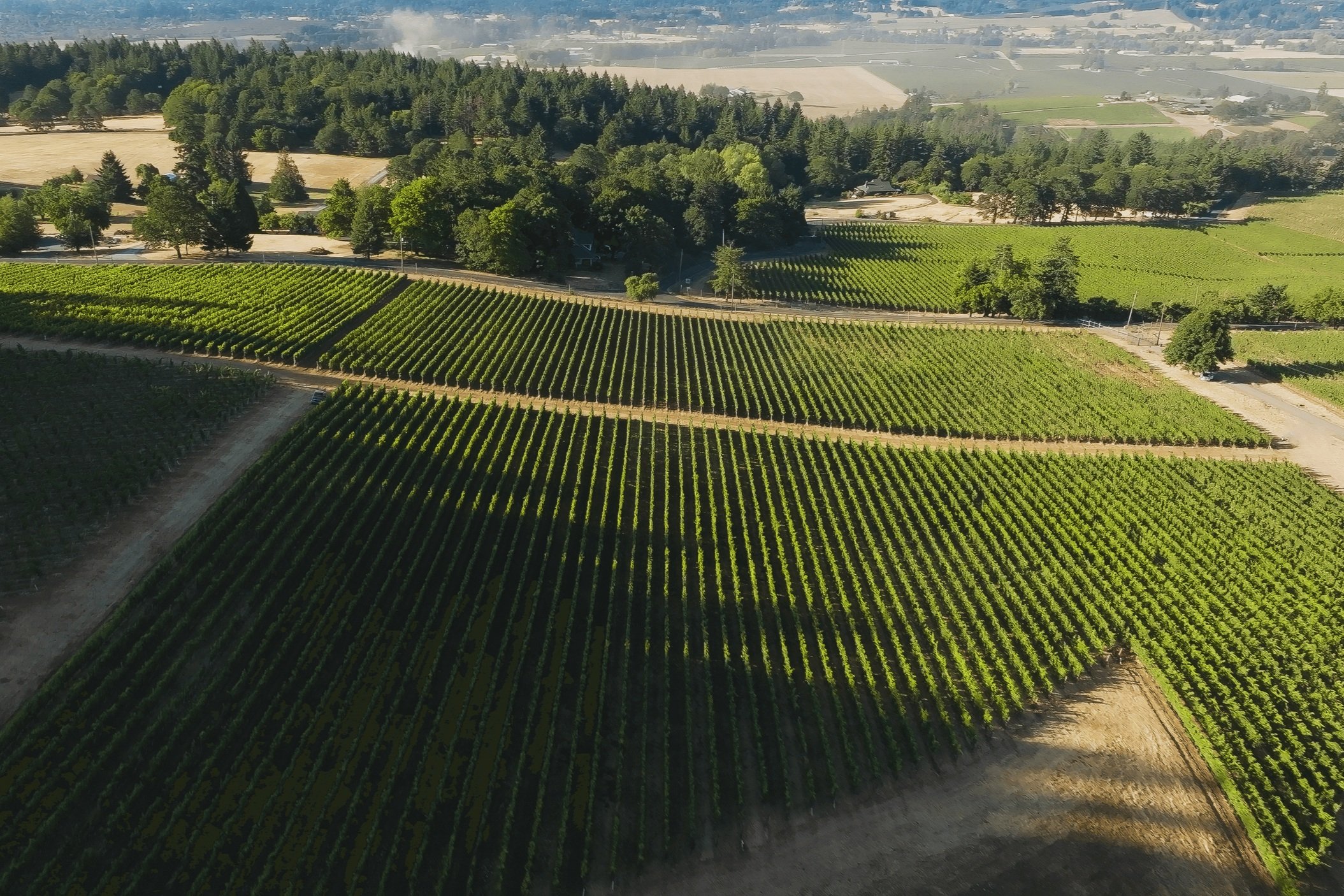
Established in 1971, our family-owned and operated winery and estate vineyards are located in Oregon's northern Willamette Valley. Company co-founder, David Adelsheim leads a current generation of passionate staff devoted to producing and selling wines of ever-higher quality with each growing season. We use sustainable farming practices and take great care to bring out the best in each of our unique vineyard sites. In the winery, we combine traditional and modern techniques, crafting wines in a style that centers on elegance, complexity, and richness in flavor and texture.
___________________________________________________

What's New

Adelsheim Vineyard announces the release of its newest wine, a prestige cuvée called “Vintage 29.” Click here for more info.

Interested in receiving exclusive wines throughout the year?
Join our Club Noir or Quarter Mile Society program and we'll ship you the best the winery has to offer.


Click here to join

Events
Club Member Preview WeekendMay. 19, 2012 Saturday May 19th: Club Member Preview
11:00 am - 4:00 pm

Featuring our 2011 Rosé, 2010 Caitlin's Reserve Chardonnay, 2010 Ribbon Springs Pinot noir, and 2010 Boulder Bluff Pinot noir.

The Boulder Bluff is our current club shipment wine and will be available for pick-up.

$20 tasting fee includes Riedel Oregon Pinot glass
Complimentary admission for Club members and two guests

Food provided by Hunt and Gather Catering.

Adelsheim Wine Dinner at Grüner: Portland, OregonMay. 24, 2012 On Thursday, May 24th at 6:30pm, Grüner Restaurant in Portland will be serving a four course tasting menu of seasonal Pacific Northwest Cuisine inspired by the wines of Adelsheim in their private Glacier Room. Courses will be paired with the following selections from Adelsheim:

2010 Pinot Blanc, Bryan Creek Vineyard

2009 Elizabeth's Reserve Pinot Noir

2009 Bryan Creek Vineyard Pinot Noir

2010 Deglace Pinot Noir

The cost is $100 per person. Please respond quickly, as seating is limited for this very special evening. For reservations or more information, please call Greg Cantu or General Manager Damien Baker at 503-241-7163, or email greg@grunerpdx.com. We look forward to seeing you!

Memorial Weekend in Wine CountryMay. 26, 2012 May 26th and 27th: Memorial weekend
11:00 am - 4:00 pm

Featuring our 2011 Rosé, 2010 Chardonnay, 2009 Elizabeth's Reserve Pinot noir, 2009 Temperance Hill Vineyard Pinot noir, and 2009 Boulder Bluff Vineyard Pinot noir.

$20 tasting fee includes artisan cheeses and a Riedel Oregon Pinot glass
Complimentary admission for Club members and two guests

Adelsheim Vineyard is one of several Willamette Valley wineries participating in the EcoTrust Farm to School Program over Memorial Weekend. These programs work to bring more locally-grown, healthy products to the school lunchroom, educate children about agriculture and support regional farmers.

News
Tracing the fruition of Oregon's wine industryMay. 06, 2012 By Kristi Turnquist, The Oregonian

In the beginning, the late 1960s and early 1970s, they were bearded young men and overall-wearing women. They were college graduates who had majored in engineering, philosophy, political science or the liberal arts. But they found their life’s work in the hills and farmlands of the Willamette Valley.

The new “Oregon Experience” documentary, “Oregon Wine: Grapes of Place,” tells the story of how the state’s pioneering winemakers were driven to produce wines when there was not yet a market for them. They shared a vision, which was to produce wines in the noblest European tradition, but bearing the specific traits of the Willamette Valley regions where the grapes were grown.

This marriage of old and new worlds was revolutionary. In time, the efforts of the early visionaries and risk-takers made Oregon synonymous with world-class pinot noir, the hard-to-grow grape for which the northern Willamette Valley climate turned out to be ideal.

In “Oregon Wine: Grapes of Place,” producer/writer Nadine Jelsing interviews the founders of the wineries — their hair now gray, or gone — who helped put the Willamette Valley on the wine map: Eyrie, Adelsheim, Sokol Blosser, Erath, Ponzi, among them. She includes taped interviews with David Lett, founder of the Eyrie Vineyards, who died in 2008, and whose passion for pinot noir earned him the nickname, “Papa Pinot.”

Jelsing reminds us that these trailblazers weren’t the first to make wine in Oregon. Peter Britt, the photographer and horticulturist, grew wine grapes in the Rogue Valley in the 1850s. But Prohibition wiped out the wine industry, such as it was. As David Adelsheim says, because of Prohibition, “we’d lost a generation of wine drinkers.”

For years, California was the center of commercial production. Its industry was known for producing jug wines that borrowed names from great wines of Europe —

“Hearty Burgundy,” and chablis — but didn’t observe the classic European standards of winemaking.

The California approach, as those interviewed in the documentary recall, was to plant every kind of grape everywhere. But that was absolutely the wrong way to grow pinot noir, which fared poorly in the hot California sun.

All of the interviewees recall how much of their ultimate success came from working collaboratively and congenially. The early winemakers shared resources and the same goal — to make the best wines possible, without compromise. And while the wines were good, at first nobody wanted to buy them. Who cared about wine from Oregon?

But when Oregon wines began winning national taste tests, influential critics jumped on the bandwagon. By the mid-1980s, word was getting out about Oregon’s wine — especially the pinot noir.

As the documentary says, there are now about 400 wineries in Oregon, and the state ranks fourth in the country in wine production. What began as a handful of dreamers planting grapes grew into an industry.

ANALYSIS: Chardonnay Meets Promise in OregonMay. 04, 2012 Group of winemakers say varietal wine is a natural partner in Pinot Noir country

by Paul Franson, Wines & Vines

Portland, Ore.—Chardonnay is by far the most popular wine in America, and Chardonnay is the natural partner to Pinot Noir around the world—except in Oregon. Chardonnay would seem a natural fit for Oregon with its Burgundian climate, yet growers in Oregon long ago chose Pinot Gris as their favored white wine.

The numbers tell the story:
• 12,560 acres Pinot Noir
• 2,590 acres Pinot Gris
• 950 acres Chardonnay

In the past dozen years, however, a group of determined growers and winemakers have worked to change the reality and perception of Oregon Chardonnay. If the wines sampled at the recent Oregon Wine Board Unwine’d Oregon tasting and visits to wineries there are any indication, things are turning around.

Ponzi Vineyards winemaker Luisa Ponzi said, "In the last five years, we’ve seen a tremendous shift in quality. Now the struggle is to change the perceptions of wine drinkers." She found great interest in the Oregon Chardonnay during a recent visit to New York. Many wine lovers don’t know the history, so for them, Oregon Chardonnay is new.

Adelsheim Vineyard's David Adelsheim, a pioneer in Oregon winemaking, said, "We took the shortcut importing vines from France instead of figuring out which California clones would work, but it took us 10 years of winemaking to find out what Oregon Chardonnay is—and we’re still trying. But we’ve gotten pretty far along."

Harry Peterson-Nedry of Chehalem recounts why Chardonnay didn’t take fertile root in Oregon: "Chardonnay is finally seeing the ascendancy it deserves as a variety in Oregon. Intellectually it has always been seen as a natural partner for Pinot Noir, however the initial results were less than awe-inspiring and definitely less than we saw in Pinot Noir."

The reason boils down to clones.

"The versions of Chardonnay initially brought into Oregon were variants of Clone 108 from California’s warmer growing regions and, although they did very well there, they were less well-suited to the cool climate of the Willamette Valley," Peterson-Nedry said.

"The person who figured this out and inspired growers to replace 108 with more appropriate clones was David Adelsheim. In the early 1980s, based on his experiences in Burgundy and a subsequent review of normal harvest times between Oregon and Burgundy pointed to the later ripening nature of 108 relative to Pinot Noir (in Oregon), dissimilar to Burgundy seeing coincident harvests for Pinot Noir and Chardonnay."

His work with Raymond Bernard, who led clonal selection research for decades at the University of Dijon in Burgundy, led to the so-called Dijon clones being imported into Oregon and the U.S. through Oregon State University. The Dijon Chardonnay clones proved to ripen appropriately there, meaning at the same general time as Pinot Noir, not two to three weeks later.

A few growers like Bethel Heights had planted Wente Chardonnay clones from California, and they did well in Oregon, too.

Peterson-Nedry added, "The Dijon Chardonnay clones gave a step-function improvement in fruit quality, whereas the Pinot Noir Dijon clones we imported merely added additional colors to our Pinot Noir palette, since the original Pommard and Wadenswil clones were and still are stellar."

The Dijon Chardonnay fruit went through quarantine, and expanding quantities in nurseries and vineyards were not available in large quantities until the mid- to late 1990s. So, it has taken 15 years to mature the vines and erase the prior reputation of the 108 clone. All of Chehalem’s Chardonnays have used Dijon clones since 2002, including both Ian’s Reserve (barrel fermented) and INOX (unoaked).

Beginning in 2000, seven wineries in the Willamette Valley committed to Chardonnay and its resurrection began ORCA (ORegon Chardonnay Alliance) to learn from each other in the vineyard and winery, and then to communicate the conversion to trade and the media. ORCA is still at work behind the scenes, expanding now from the seven wineries (Adelsheim, Argyle, Chehalem, Domaine Drouhin, Domaine Serene, Hamacher and Ponzi) to include the bulk of 30-plus wineries releasing quantities of Oregon Chardonnay.

A different style
Not surprisingly, most Oregon winemakers are attempting to make Burgundian-type Chardonnay, not the rich, oaky-butterscotch wines made famous by Rombauer and others in California.

More typical is Luisa Ponzi, who studied in Burgundy and makes her wine in the style she learned there: All barrel fermented with wild yeast for 18 months, but with very few new barrels. The lees are stirred often, and the wine goes through full malolactic fermentation, which works as the musts are quite acidic. "I highlight the richness but the real focus is on keeping it bright to go with food."

Steve Girard of Benton-Lane Winery, who earlier made wine in California, is an exception. "I like that (Napa) style of Char donnay. I make the wine for myself." Girard first made Chardonnay in Oregon in 2009 and produced only 200 cases last year; he plans to make 2,500 cases in five years.

Girard says he thinks the time is ripe for Oregon Chardonnay. "It will be hot. It’s the best place on earth to grow Chardonnay. In 10 years, Oregon will be as beloved for Chardonnay as Pinot Noir," he predicts.

Adelsheim agrees, "We're on the way toward Chardonnay being equal to our other wines, in quality if not quantity. The world is tired of a certain style of Chardonnay, and they will be delighted to find a delightful wine hiding behind the label they thought they knew."

In spite of the progress, however, some say the effort may be too late. Myron Redford of Amity Vineyards, who makes only about 100 cases of Chardonnay annually, said, "When the Dijon clones arrived, the Chardonnay ship had already sailed. We were in the middle of the ABC (Anything But Chardonnay) period and Oregon wineries had shifted to Pinot Gris." He added, "As a result, Oregon is making some very nice Chardonnay, but Chardonnay is no longer a major focus of leading-edge wineries."

Oregon gets its act together
Oregon vintners and winemakers have been described as a pack of cats; notoriously individualist and fractious, some having fled California for a rural life long ago and many who don’t shy away from being described as former hippies.

In particular, Oregon state wine efforts have been widely seen as ineffective at promoting the state's wines, while the various regions have squabbled over focus. The contrast was especially great with the effective promotions by Washington state and Napa Valley.

That seems to be changing. A year ago, the Oregon Wine Board hired Steve Burns, who gets credit in part for Washington's promotional success, as interim director while they searched for an executive director. Tom Danowski was recently named to that position.

One of the first things Burns did was to create Oregon Wine Month and establish Oregon Unwine'd, a major tasting that attracted almost 90 wineries. Amazingly, the state hadn't held such an event in recent history and skeptics questioned whether it could attract enough traffic, particularly at $50 per ticket.

With 1,000 trade and consumer visitors, however, the Board feels confident, and plans to take the show on the road next April during Oregon Wine Month, including to the belly of the beast, San Francisco.

OurStory Home About Our Wines Club News VisitUs Trade Partners Buy Wine